

Schooling on the Road: Expert Tips from a Traveling Teacher
Landavanner Emily, an experienced English teacher, shares her valuable insights on schooling while traveling. Her advice offers reassurance and practical guidance for parents who may feel overwhelmed by guilt or uncertainty.
This is the perfect read to help put your mind at ease and inspire confidence in your educational journey on the road.
Unschooling: Who Needs a Classroom? By Emily Clarke
I’ve seen so many posts in the FB groups I’m in from parents wondering how to handle education while on the road, and I really hope this post helps ease some of those worries. As a teacher and a parent, I totally understand the concern. But if you're thinking of hitting the road, don't stress about formal schooling—life on the road is one big classroom!
We’re unschooling, which means the kids learn through their interests and our real-world experiences, not from a set curriculum. It's a perfect fit for our travels. We're lucky to have a one-year exemption from formal schooling here in South Australia, but even without that, we would still be learning through our adventures.
Our learning looks a bit different every day, and we mix things up depending on where we are and what we are doing. For literacy, we keep regular journals, write postcards, send texts, or make calls to family. Stan often uses speech-to-text to dictate his thoughts into notes on my phone, and Zali writes hers out herself, asking for spelling help when she needs it. We also read books, websites, and brochures about the places we will be visiting, read when we have downtime, use Reading Eggs in the car, and access e-books from the South Australian library. We find ample opportunities to read and write—and I’ve even rekindled my passion for writing through our family blog, which has become a daily mindfulness habit for me!
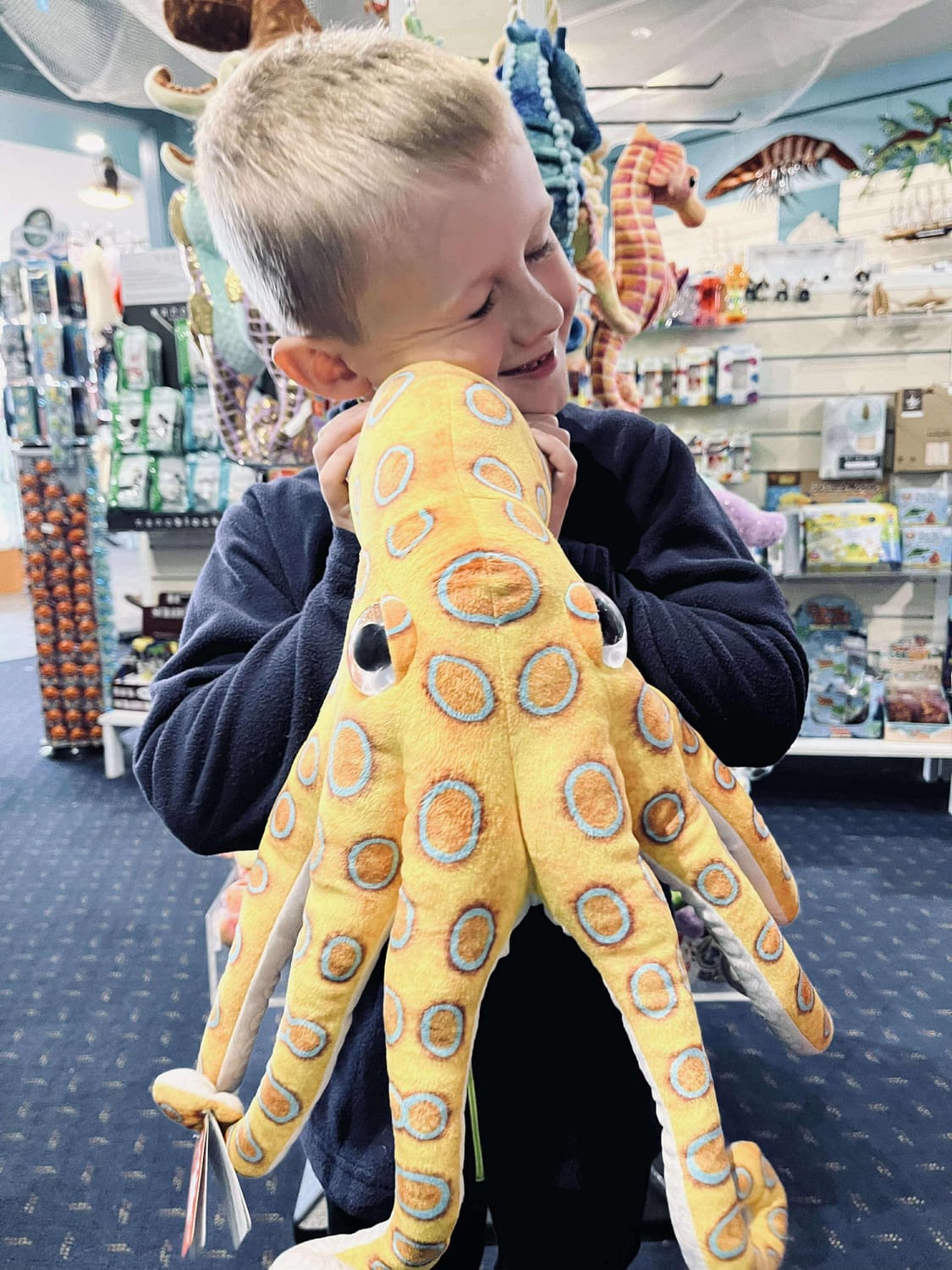
Math is a big part of our travels too. Each kid gets $10 a week to spend however they want. It's a great way to teach budgeting, addition, subtraction, and decision-making. We’re also very open about our family budget and how we track our finances. For example, this week we decided we’ve seen enough zoos, so we’ll save our money for something else rather than heading to Tasmania Zoo as we initially planned. This decision was also inspired by the amazing Meander Wilderness Experience, which helped them kids realise the benefit of saving for bigger experiences. Hence Stan has decided he is saving his next 4 weeks allowance for the blue ringed octopus toy he saw - seeing will be believing when we see the next icecream store.
Time is another important lesson on the road. We talk about how long it will take to get from place to place and how we need to plan ahead to make sure we don’t miss things and get to tours on time. We’ve also practice telling the time with our youngest, little man.
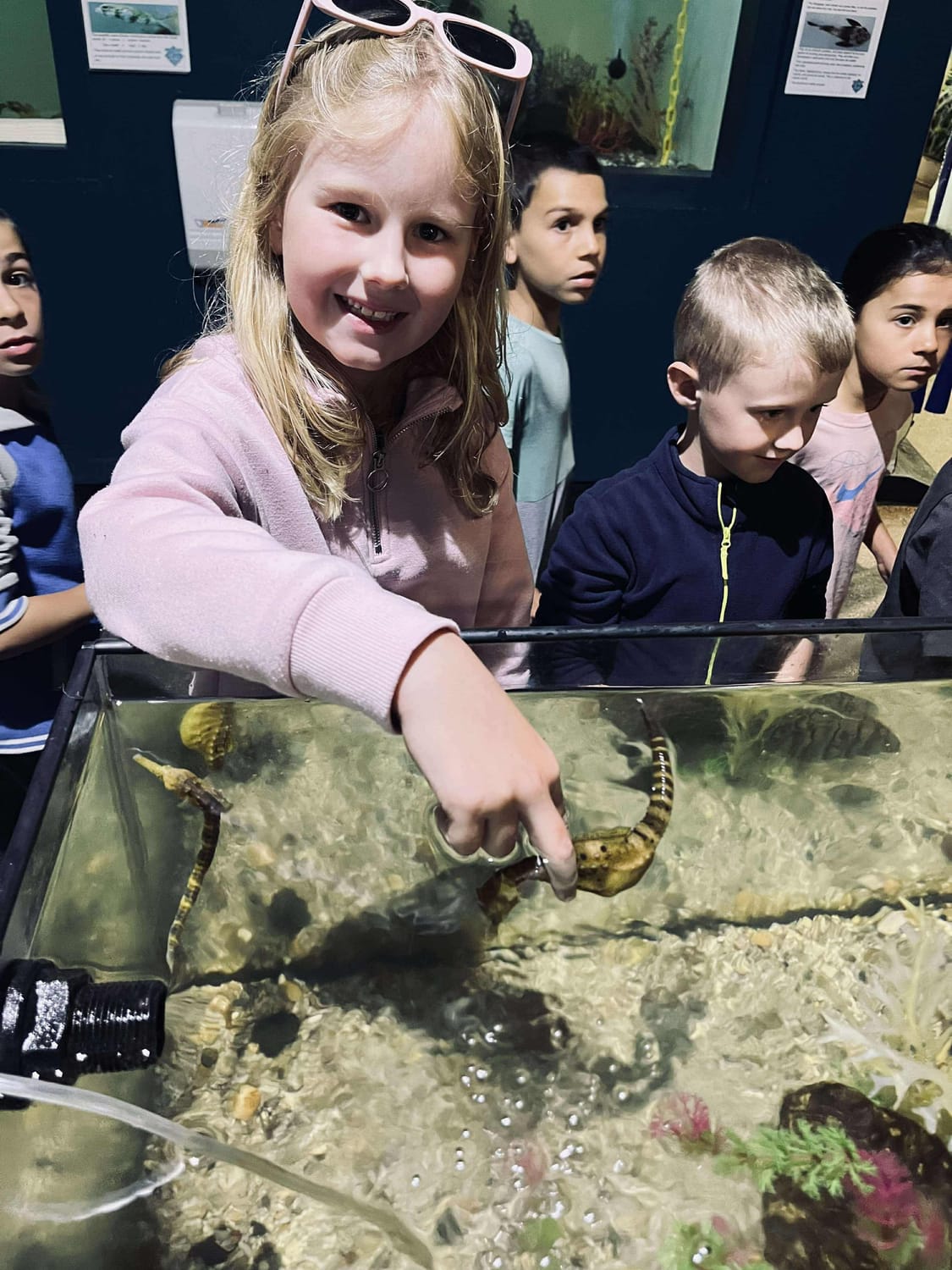
We recently visited Platypus House and Seahorse World in Beauty Point Tasmania, and the experiences were full of science, humanities, history, literacy, and maths. At Platypus House, the kids learned all about platypuses and echidnas, including how they move, what they eat, their unique adaptations and behaviours. Whilst at Seahorse World, the kids learnt about the life cycle of a seahorse. They were amazed to hear that male seahorses carry eggs in a pouch and can carry up to 1,136 babies! We also learnt how seahorses are sold to aquariums and pet shops around the world and how they are cared for.
As a teacher, I can assure you all these experiences tie in nicely with the Australian Curriculum. After the visit, we sat down to write up what we learned for our family blog, which gave us a chance to practice literacy, discuss what we found most interesting, and do some further research to answer new questions the kids had. At both places, the kids engaged with the guides confidently, asking and answering questions, which helped develop their social and emotional wellbeing.
Then, we went to Hillwood Berry Farm, where the kids practiced estimating how much their raspberries weighed, and we talked about how much berries cost per kilo. This was a quick maths lesson in measurement and money, while also giving them a glimpse into food production.
But the real magic of schooling on the road happens when the kids are involved in the decision-making process. Whether it’s choosing what we do next, what’s on the menu or how to spend our money, their input is essential. This encourages critical thinking and teaches them how to prioritise and plan. We are only two weeks into a year-long lap of Australia, but already, I can see how much we are all learning together. If you are thinking about taking your family on the road but are worried about school, my advice is simple: trust yourself. You are well-rounded, capable people, and you will make the most of every learning opportunity along the way. There is no need to stress about formal schooling—it’s the real-world experiences that teach kids the most. So go ahead, embrace the adventure, and enjoy the ride!
Thank you so much for sharing your journey with us, Emily! Wishing you continued joy and adventure on the rest of your travels. 🚐✨
Eulanda xx

About this blog
Eulanda and her family have been on the road for two years, travelling Australia with her husband Trent and two boys, they love to explore and share their experiences, in the hope it will inspire others.
Find Us On


Created with ©systeme.io